

Your Tech Journey
Dive into a world of cutting-edge electronics tailored to enhance your lifestyle and boost engagement through quality devices.

WELCOME
VIBE TECH FUSION AND FEASTS ELECTRONICS COMPONENTS

WELCOME
Experience the future of technology with Vibe Tech Fusion and Feasts, where cutting-edge electronics meet exceptional service. Discover our curated selection of top-tier products to elevate your everyday life.

Services

Components
Discover the essential components for your futuristic projects and innovations right here! We everything you need to bring your visionary ideas to life. Brace the future with our curated selection, designed to inspire creativity and progress in your endeavors. Let's transform your concepts into reality together!

Systems & Laptops
Welcome to our tech review site! Here, you'll find in-depth analyses and honest reviews of the latest gadgets and systems, you make informed decisions. Whether you're a tech enthusiast or looking for the best devices, we've you covered. Dive in and discover your next tech!

Batteries
Discover the power of our top batteries! Engineered for performance and reliability, our batteries designed to meet your every need. Whether it's for everyday devices or high-demand, you can trust that our batteries deliver exceptional energy and. Experience the difference with the best batteries on market!

Start Your Project with the Right Electronic Components
Sometimes the hardest part of building something is finding the correct electronic components. People building robots, automation projects, or smart devices often start by exploring collections like this one. That is why we created this collection so you can easily explore different options in one place. Explore the products here and choose the electronic components that matches your build.
components
BASIC ELECTRONIC COMPONENTS

Explore the Collection




Frequently Asked Questions
Faqs 1. How to test/check electronic components? With a digital multimeterResistors: To check the resistance of a resistor, first set the multimeter in resistance mode.
Capacitors: Set the multimeter in continuity mode. Connect the multimeter leads across the capacitor
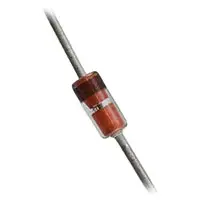
Diodes: Measure the forward bias voltage with the multimeter in diode mode. It should be between 0.5–0.7 V for a silicon diode and 0.2–0.3 V for a germanium diode.
2. How to solder electronic components?
Soldering is the process of joining two or more metal objects together by melting and applying a filler metal (solder) into the joint.
Tools required for soldering:
1. Soldering Wire
2. Soldering Iron
3. Flux
4. Soldering Station (optional)
5. Stand (optional)
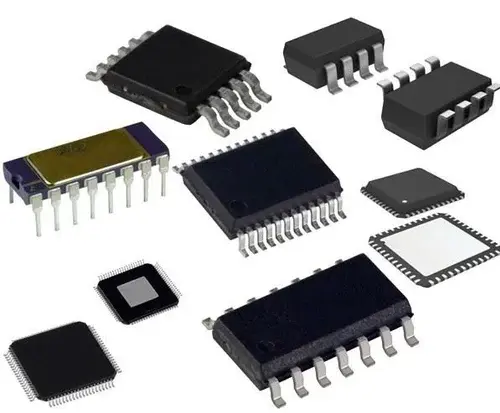
3. What are active electronic components?
* Active electronic components generate, amplify, or control electrical signals.
* Examples include transistors, diodes, thyristors, and integrated circuits.
* They are used for signal processing, amplification, logic operations, and power regulation in both consumer and industrial electronics.
4. What are active electronic components?
* Active electronic components generate, amplify, or control electrical signals.
* Examples include transistors, diodes, thyristors, and integrated circuits.
* They are used for signal processing, amplification, logic operations, and power regulation in both consumer and industrial electronics.
5. How to store electronic components?
* Store components away from heat and humidity.
* Use labeled containers or anti-static bags for easy identification and protection.
* Group similar parts together, keep shelves dust-free, and use racks for small components like screws or connectors.
* Proper organization extends component life and simplifies retrieval during projects.
Our Team.
This is your Team section. It's a great place to introduce your team and talk about what makes it special, such as your culture and work philosophy. Don't be afraid to illustrate personality and character to help users connect with your team.

CEO NAVEEN

INCHARGE

Huge Title
_edited.jpg)
Huge Title
products
WIRE
The word "wire" refers to several entirely different concepts depending on the context.
Electrical Wires:
Single, flexible metallic conductors used to carry electricity or data signals throughout electrical circuits.
Mechanical Wires:
Rigid or flexible metal rods or strands used to bear heavy loads, structural tension, or create wire ropes.
Wire vs. Cable:
The technical distinction where a wire is a single conductor, while a cable bundles multiple insulated wires together
TOOLING
The process of designing, acquiring, and manufacturing the specific equipment, hardware, and accessories required to produce a product.
Prototype Tooling:
Often called "soft tooling," this involves making preliminary, less expensive versions of tools to test the form and function of a part before committing to mass production.
Production Tooling:
Heavy-duty, high-precision tools designed to endure hundreds of thousands of cycles and deliver tight tolerances consistently
ACTIVE COMPONENT
External Power Required:
Unlike passive components, they cannot function without an outside power source.
Power Gain:
They can take a weak input signal and produce a stronger output signal.
Control and Manipulation:
They control the direction and magnitude of electrical charges within a circuit
PASSIVE COMPONENT
A passive component is an electronic device that does not require an external power source to operate and cannot amplify, generate, or provide power gain to a signal.
Resistors:
Dissipate electrical energy as heat to restrict or control the flow of current within a circuit.
Capacitors:
Store and release electrical energy in the form of an electrostatic field. They are commonly used for smoothing out voltage fluctuations and filtering signals
Inductors:
Store and release energy in the form of a magnetic field when electrical current passes through them.
Services
 75 Indian rupees
 100 Indian rupees
 50 Indian rupees


